
An orchard is the slowest food source in Manor Lords and one of the few that can be planted badly in a way you cannot fix. Trees take years to mature and are harvested in a single month. The size of the plot you drew at the start decides forever how much of that harvest reaches a granary. Getting it right the first time is the entire skill.
Which fruit, and when it pays back
Three fruits, and they trade maturity against yield in a straight line. Quince matures in roughly two years, apples in about three, pears in about four. The order reverses on output: pears out-yield apples, which out-yield quince.
So there is no ranking here, only a choice. Quince is right when you want the orchard producing sooner and can accept a smaller harvest. Pears are right when the settlement is stable and you are planting for year five. Apples sit in the middle and are the safe default if you have no strong view.
The one clear wrong answer is planting quince during a food crisis. Two years is an eternity when you are short right now, and a fast vegetable like beets solves the immediate problem while the orchard is still saplings. Plant orchards from surplus, never from scarcity. Nothing else on this page matters as much.
September is the whole year
Orchards collect only in September. Every other month the trees just stand there. One fact drives every layout decision below: a harvest that does not get picked in its month is not delayed. It is gone, and you wait another year.
It also means orchard families are idle for eleven months, which is fine and is exactly why they should be given storehouse or granary work in the meantime. What they must not be given is a farmhouse job. Fields and orchards share the same harvest season, so those families would compete with themselves at the only moment either job matters.
Draw it large, draw it square
Two rules, and they are not the same rule. Large, because a fixed number of families works an orchard more efficiently the more trees they cover. 200 apples from two families beats 200 from four, and the families you free up can run their own extensions elsewhere. Target roughly 400–500% of the duplex footprint for fruit, against 250–300% for vegetables.
Square, because harvesters walk. A long thin orchard spends its single September on transit, and the back rows are never reached. The failure is silent: the trees are there, the fruit is there, and none of it is collected. Past the point where walking eats the window, bigger stops being better. An oversized orchard wastes money and land at once.
What the fruit is actually for
Beyond being a food type in its own right, fruit does two jobs that make an orchard worth more than its calorie count. It counts toward the food variety that gates burgage plot tiers, and tier gates armour tier. An orchard is military infrastructure at one remove.
And in the current Beta it feeds a beverage chain: the brewery makes cider from apples at 4:1 and mead from honey at 1:1. A region with orchards and apiaries can therefore satisfy its tavern demand without growing barley at all, which frees the fields for food and the malthouse for export. If you were already planting apiaries for the pollination bonus, the mead line costs you nothing extra.
Choosing and sizing the orchard
Quince pays back fastest; apples and pears take longer to bear fruit but produce more once mature.
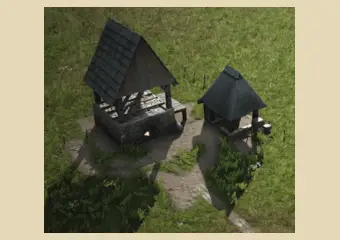
It takes about 2 years to yield anything. A fast vegetable like beets always wins when you're short right now.

Large: 200 apples from 2 families beats 200 from 4, and the spare families run their own extensions. Square: minimum walking to the back trees.

Bigger = trees that never get picked = wasted money and space.

Every other month the trees just stand there uncollected. The walking-distance rule from #67 matters more here; there's one shot a year.
All Burgage Plots & Extensions tips in the field book →
Raising the yield
The bonus applies to every farm, orchard and veggie plot in the region at once, which makes it one of the highest region-wide returns available for the cost.
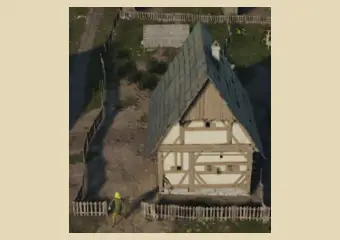
A handful of apiaries lifts the whole region's food with no micromanagement (#47)
Use high-meadow regions for honey and crop yields, not for growing a herd faster.
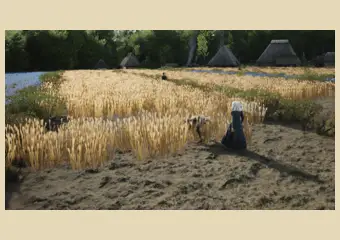
Fruit fell ~10% too. Backyard veg is no longer a free food engine, so diversify into cheese, fish and bread earlier.

The farming guide covers meadow and fertility in depth →
Staffing, regions and what fruit becomes
They'll do one job or the other, not both. Storehouse or granary work near home suits them
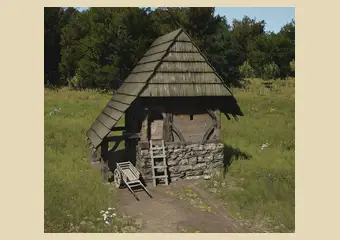
Brewery makes Cider from Apples 4:1 and Mead from Honey 1:1. Regions with orchards or apiaries can meet beverage demand without barley.
Split by type and each cart run stays short

Save barter for non-consumables: stone for castles, iron for armories.
Combined with #99's golden rule, this is close to an auto-skip unless the map's fertility is already so poor that agriculture wasn't going to carry the town anyway.

Read these next

Farming & Fields
Fertility pools, field size and the work-area trap that also catches orchards.

Food & Winter
Why variety gates plot upgrades, and where fruit sits among the food types.

Farm Calculator
Size the fields around the orchard: they compete for the same families.

Burgage Plots
How extensions, backyards and plot sizing work in the first place.