
Approval is the closest thing Manor Lords has to a score. It is also the least forgiving system to leave unattended, because it does not fail gradually. It fails at thresholds, and the first one is exactly where you start.
The three bands
At or above 50%, one family joins you per month. At or above 75%, two. Below 50%, none, and families start leaving. There is no partial credit between the bands, which means 74% and 51% grow at identical rates and the effort spent moving between them bought you nothing.
You begin at exactly 50%, which is neutral rather than good, with five families and no housing built. The clock is therefore running against you from the first minute: homeless families drag approval down every month they stay homeless, so approval falls before you have made a single mistake. The opening build order places burgage plots that early for exactly this reason. The plots are not for growth. They stop the bleeding.
The levers, in order of leverage
Food variety is the largest and the one with the most headroom. Plot tiers gate on how many types of food the marketplace supplies, not the amount. A town with one abundant food has an approval and upgrade ceiling it cannot buy its way past.
Staffing your distribution is the most underrated. Fully manning the granary, storehouse and marketplace gives a direct approval boost, separate from the goods themselves. Having the hands to physically move goods to a stall is its own bonus. It is also nearly free, since those roles suit families with downtime.
Underneath both sit the baseline needs: water from a well, fuel in winter, and church access. A plot missing any of them will not upgrade and its family will not be content, no matter how much food is in the granary.
The penalties matter more than the bonuses
Approval is easier to protect than to build, and two events do most of the damage. Mass starvation applies an explicit penalty on top of the normal drift. One recorded case saw seven to ten families starve at once and an additional −11% satisfaction stack on top. That penalty outlives the food shortage that caused it, so a single mishandled winter costs you the following year's growth as well as that year's population.
Land tax above roughly 10% drains approval continuously for as long as it is set. The trade is almost never worth it. Look at what it buys. A rate that raises 20% more coin while dropping you from +2 families a month to +1 has cost twenty-four families a year for a modest monthly sum. Raise the tier mix instead of the rate.
The one place to tax hard anyway
A freshly conquered region is the exception, and a clean one. Its citizens' approval does not touch your capital's, so there is little downside to setting a steep rate immediately and draining its wealth into your treasury. You are not building a long-term relationship with a population you just took.
Approval is also military
Two connections that are easy to miss. Approval feeds militia morale, so an unhappy town fights worse as well as growing slower. And the plot tiers that approval unlocks are what supply armour: tier 1 gives helmets, tier 2 gambesons, tier 3 chainmail. The fastest route to a properly equipped regiment runs through the granary and the market stall, not the smithy.
Public order is a separate number worth watching alongside it: left low, it turns your own citizens to banditry permanently, which is a failure mode with no recovery.
Where approval starts and how it sinks
Fifty per cent is neutral, neither happy nor discontent. You start with five families and no housing, so the clock is already running: build living space early.

One case saw 7-10 families starving at once and an extra -11% satisfaction penalty stack on. A bad winter can spiral into an approval crisis that outlasts the food shortage.
All Traps & Hard Lessons tips in the field book →
Raising it
Beyond food variety, having enough workers to distribute goods is its own noticeable approval boost.
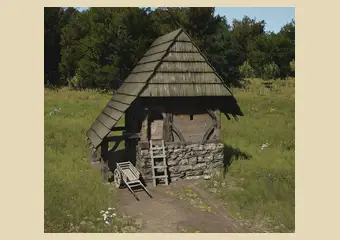
Low-tier towns can spam 2 types. Advanced towns need pears AND apples, pigs AND goats, carrots AND cabbage, wheat AND rye bread.
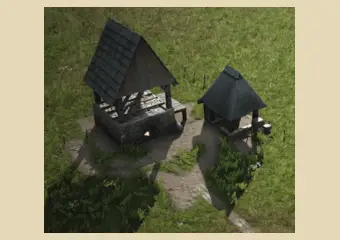
Just 2 planks + 20 regional wealth for roughly 12 eggs + 3 meat (15 food) a year. A built-in surplus over a family's 12-food need, from day one.

Work out the stockpile that variety has to sit on top of →
Taxation, tiers and origins
Without Regensburg (#93) the approval hit is more noticeable, but upgrade cost stays low on any origin. Rarely a good reason to leave a plot low once you can afford the jump.
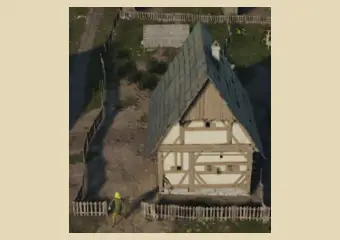
+1 regional wealth per plot from level 1, scaling: T2 pays 2/family/month, T3 pays 3. Cheap plot upgrades, negligible tax approval hit. (Its salt/iron import perk is worthless; see #100.) Only the base occupied plot counts toward per-plot wealth, not side extensions.
Level 2 is the transformative upgrade: artisans, plus living space for another family. Level 3 adds no capability, only double the regional wealth. An income decision, not a progression one.
Its citizens' approval doesn't touch your capital, so there's little downside to setting a steep rate right away and draining its treasury into yours.
Even without converting a plot it gives better food-variety satisfaction and a higher reforestation success chance. A reasonable default if nothing stronger is available.

Read these next

Population Calculator
Turn your approval percentage into families per month.

Food & Winter
Food variety is the biggest single approval lever you own.

Tax Calculator
Where the rate stops raising coin and starts costing families.

Burgage Plots
Housing is the first approval problem and the one that starts on turn one.